

(Initially posted July 17, 2019 on LinkedIn)
Growing up I loved playing Roller Coaster Tycoon. I’d pop the Age of Empires II out of the drive, slip in the shiny Roller Coaster Tycoon CD and suddenly I’m Walt Disney. Then I relied on feelings and observations to guide my park-running decisions. I’d see a long queue line and see that Go-Karts is popular and decide to build another. I’d feel like my guests wanted a bathroom in a certain spot (I made drinks free and bathrooms cost $15) and drop one there. I’d see that Alan S is lost and personally intervene by picking him up and dropping him back on the path.
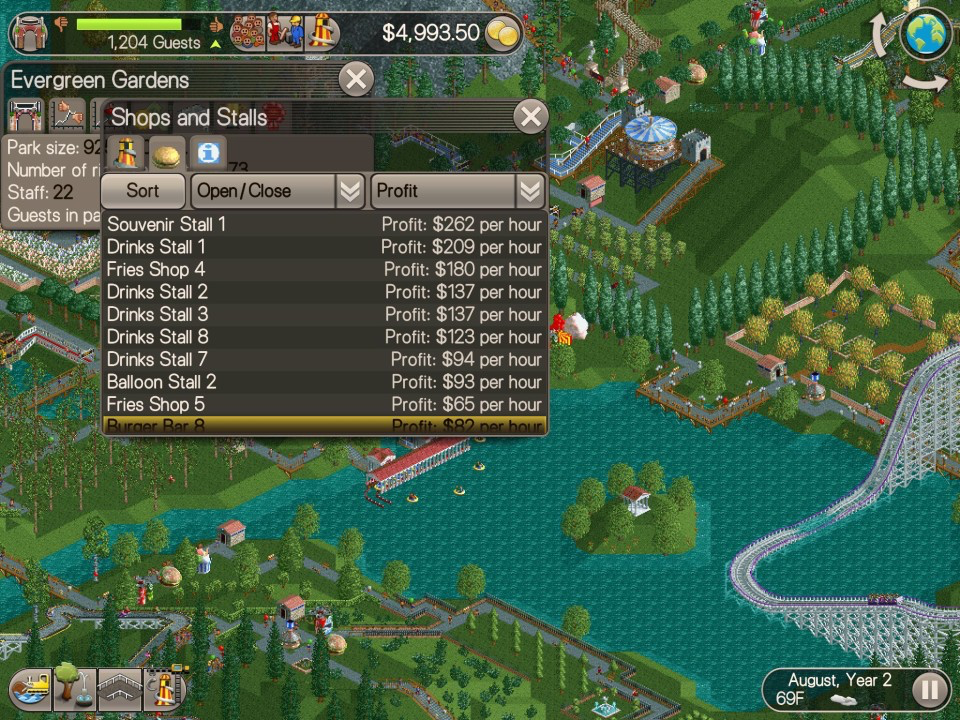
I picked up this game as an adult on for my iPad and my approach is entirely different. As a kid, I didn’t even know I could open up the “Thoughts” tab or see exactly how a stall or ride is doing. I’m constantly opening up the financials for each stand or ride, playing with the prices, trying to figure out supply and demand for a certain item or ride. As I started to consume this data, I immediately wanted a better way to organize and slice and dice it. I wanted to be able to track price and sales over time and drill down to the lowest granularity. I wanted more data. Yes, now I know that “Information Kiosk 4” is my highest selling kiosk but is that because of the location? The prices? The umbrella colors?
Companies that aren’t data-driven and not managing by exception are doing the exact same thing as 10-year-old Bryan (although hopefully, not charging $15 dollars for bathrooms). They will be reactive to problems, driving their company entirely by feel and observations and building a second go-cart track instead of raising the prices. They’re putting out fires that should have been settled 3 weeks ago. They’re reporting off of stale data, lost customers and broken-down rides.
Data-driven companies are the adult Bryan. They’re using data in real-time to make decisions, getting alerts that people are getting confused and fixing the sidewalks before Alan S even complains. They’re tracking trends and getting alerts on their phones when things fall out of exceptions. They’re not getting 10-page reports listing all sales, they’re getting an alert when Information Kiosk 4 is having an incredible year and can drill down immediately and see why.
Who are you? Are you out there building more go-carts or actually using data to drive your business forward?
 Bryan Van Kampen